

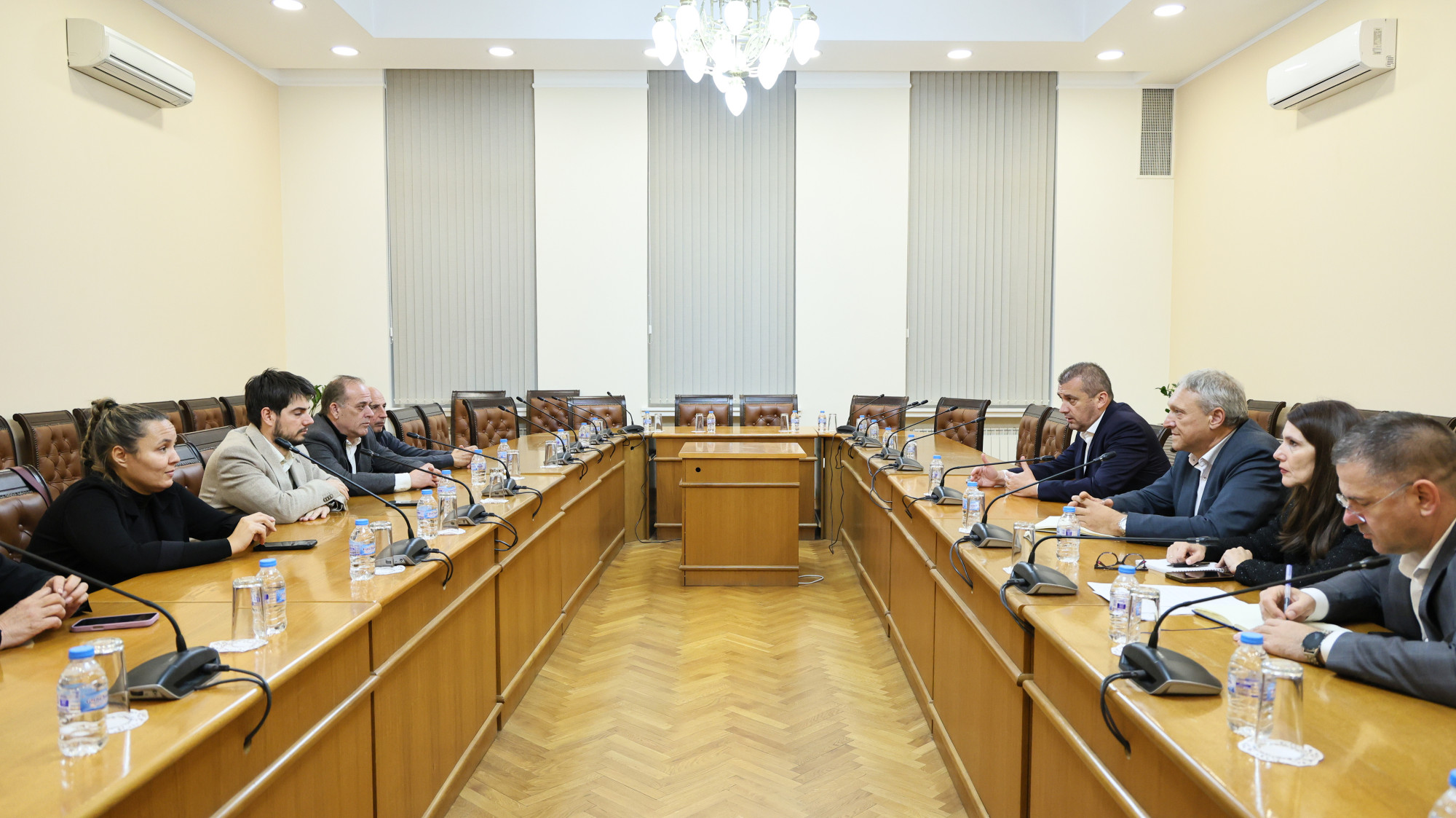
The Minister of Transport and Communications, Georgi Peev, held an urgent conversation with the Minister of Transport and Infrastructure of the Republic of Türkiye, Abdulkadir Uraloğlu, due to the build-up of trucks at the Bulgarian-Turkish border. The two discussed options for a swift solution and for normalising traffic through the crossing point.
This was announced by Minister Georgi Peev during a meeting with representatives of Bulgarian road hauliers. He pointed out that the situation remains most difficult at Kapitan Andreevo Border Crossing Point, where the build-up of truck queues is the result of a combination of factors.
Large-scale reconstruction and modernisation is currently under way at the crossing point, requiring the temporary closure of some lanes. Further delays are caused by stricter checks on compliance with the rule of a stay of up to 90 days in any 180-day period in the Schengen Area for third-country nationals and by protests by Turkish hauliers against this rule. The traditional increase in traffic ahead of Türkiye’s national holiday on 29 October further complicates the situation.
According to the border authorities, today between 08:00 and 18:00, 418 trucks were processed on exit through Kapitan Andreevo Border Crossing Point and 0 on entry. Over the past 24 hours, a total of 1,304 trucks passed through the crossing point, of which 279 on entry and 1,025 on exit to Türkiye.
“We are working in full coordination with the Turkish side and the competent Bulgarian institutions to reduce the truck queues at the border as quickly as possible. We are aware of the losses and difficulties the sector is facing. That is why we are taking concrete steps to optimise checks and organisation so as to restore normal truck throughput at the crossing point,” Minister Georgi Peev told the sector representatives.
Working meetings with the competent institutions and industry organisations are forthcoming to determine specific follow-up actions for a lasting solution to the problem.

