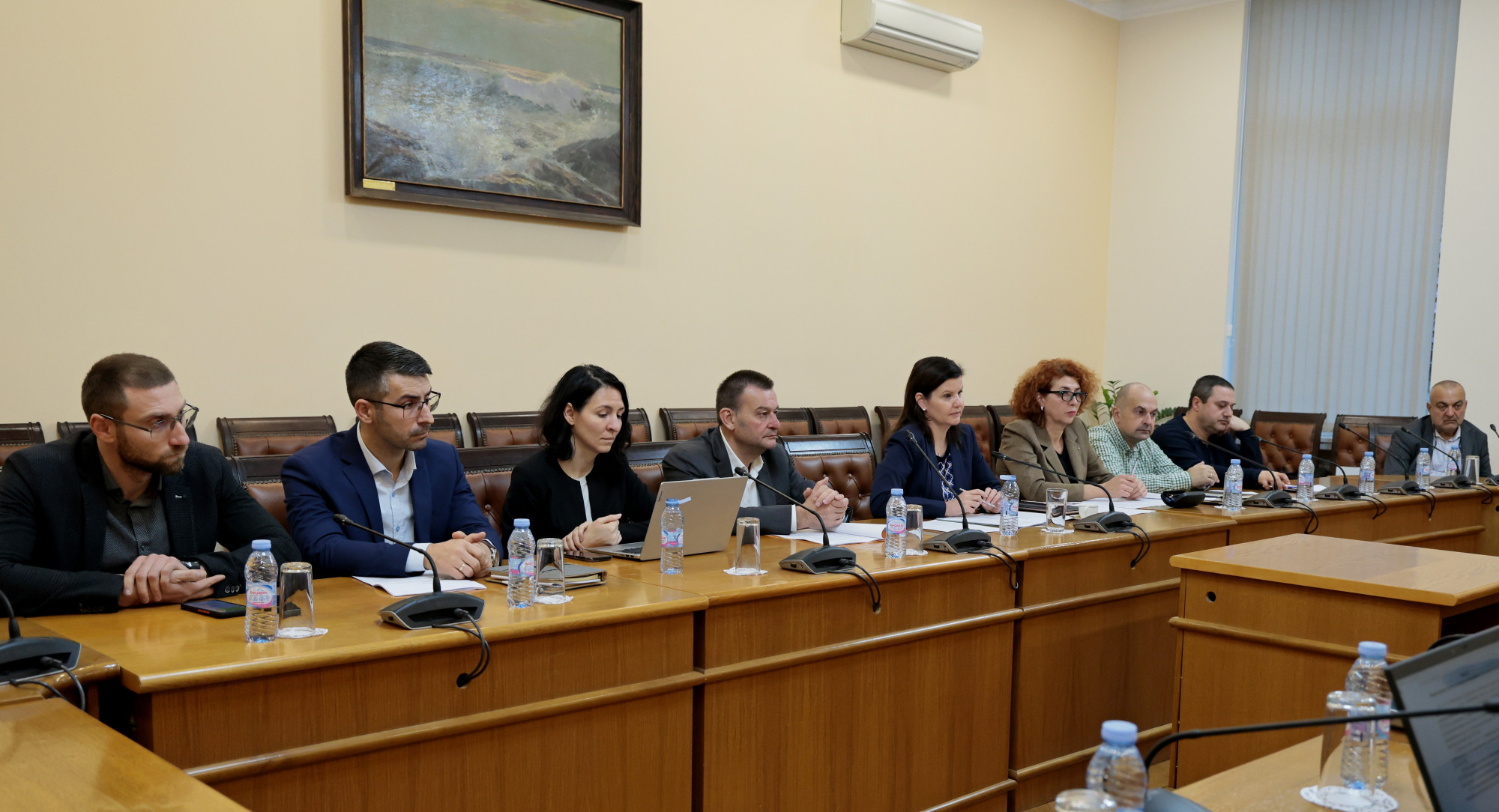

We are making the most important reform in public transport in Bulgaria in half a century. Deputy Prime Minister and Minister of Transport and Communications Grozdan Karadzhov said at the presentation of the draft Public Transport Act to the National Association of Municipalities in the Republic of Bulgaria.
“For decades, there has been talk about a national transport scheme, a transport model and a single ticket, but until today no one has dared to undertake this reform. It is high time for them to become a reality,” Grozdan Karadzhov said, adding that the law was created with a main focus on passengers. The state and municipalities are just a tool, and the goal is convenience, accessibility and predictability for people everywhere in the country.
The Deputy Prime Minister outlined the critical transport picture in Bulgaria. According to data from the municipalities, 738 settlements do not have any public transport – neither bus nor train. Another 601 settlements have inadequate service – paper-only schedules, irregular lines and lack of connections. Only 61 settlements have adequate transport services. “This means children who cannot get to school, elderly people without access to a doctor, people who cannot go to work, and entire villages cut off from the world,” the Deputy Prime Minister added.
According to him, the reasons for this are systemic and accumulated over the years – fragmented laws for different types of passenger transport, lack of a single scheme of interconnected timetables, insufficient control, lack of a single ticket and synchronization between municipalities and the state, as well as lack of clear quality standards. “The new law was created to fix all this at once,” he said.
“This is the first time we have seen such a modern, socially-oriented law put the passenger at the center. Our proposals are taken into account and reflected in the texts of the law, such as on-demand transport, which we have repeatedly insisted on,” Silvia Georgieva, Executive Director of the association, said. The association specified that they are ready to participate in the working groups that will develop the regulatory framework.
“Please accept this bill as our common task and result of our joint work, because municipalities are the main partner of the state in planning public transport. With this law, you will already have more effective planning tools, a model for inter-municipal alliances, clear rules for tariffs and schedules, access to real-time data and the ability to integrate urban schemes with national ones,” Deputy Prime Minister Karadzhov emphasized.
He stated that the Public Transport Act removes the transport isolation of hundreds of settlements, creates convenience and predictability for the traveler, gives municipalities modern tools and introduces European quality standards. “This is a law on the human right to movement and the right to live a decent life, no matter where you are,” said Grozdan Karadzhov.