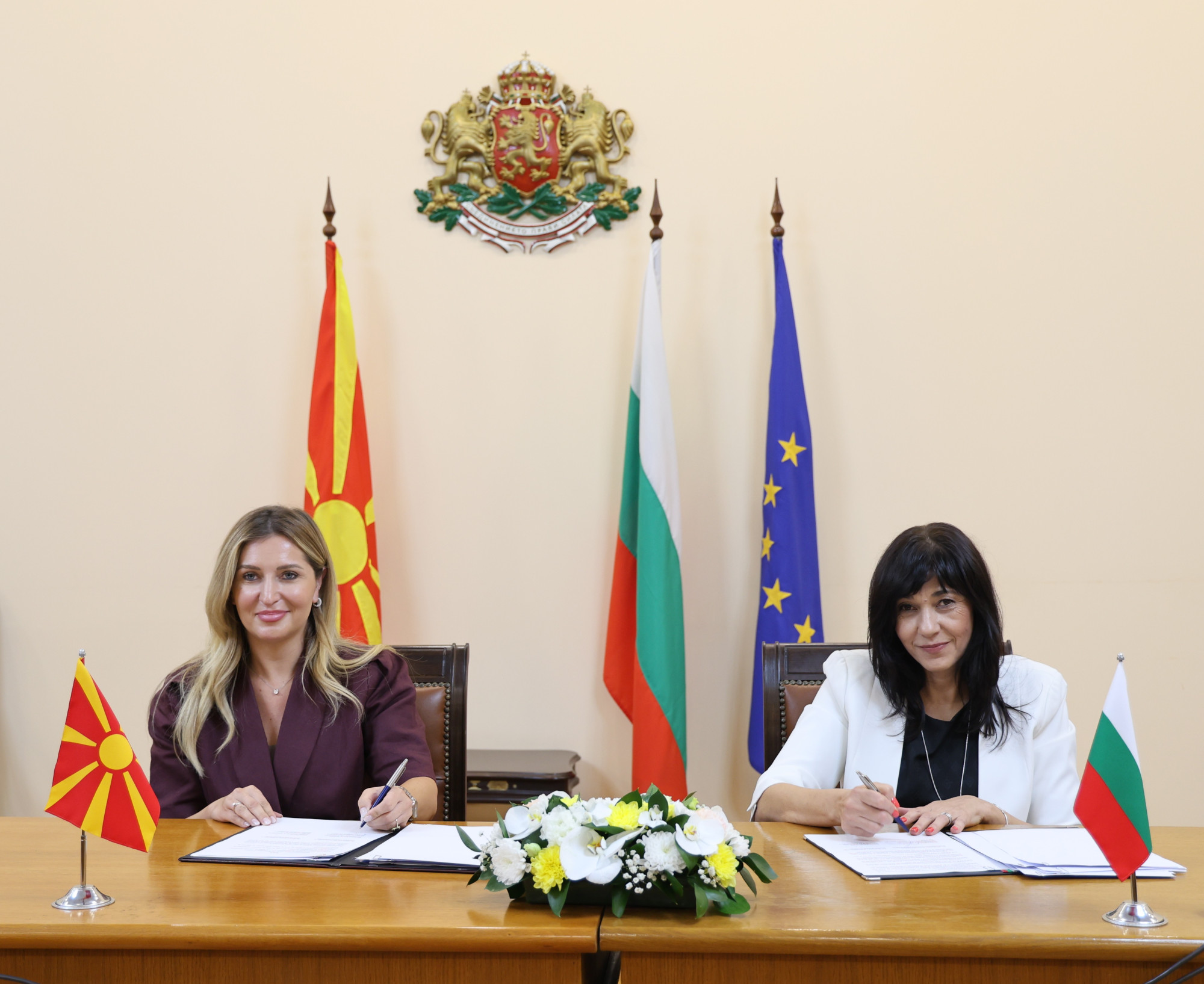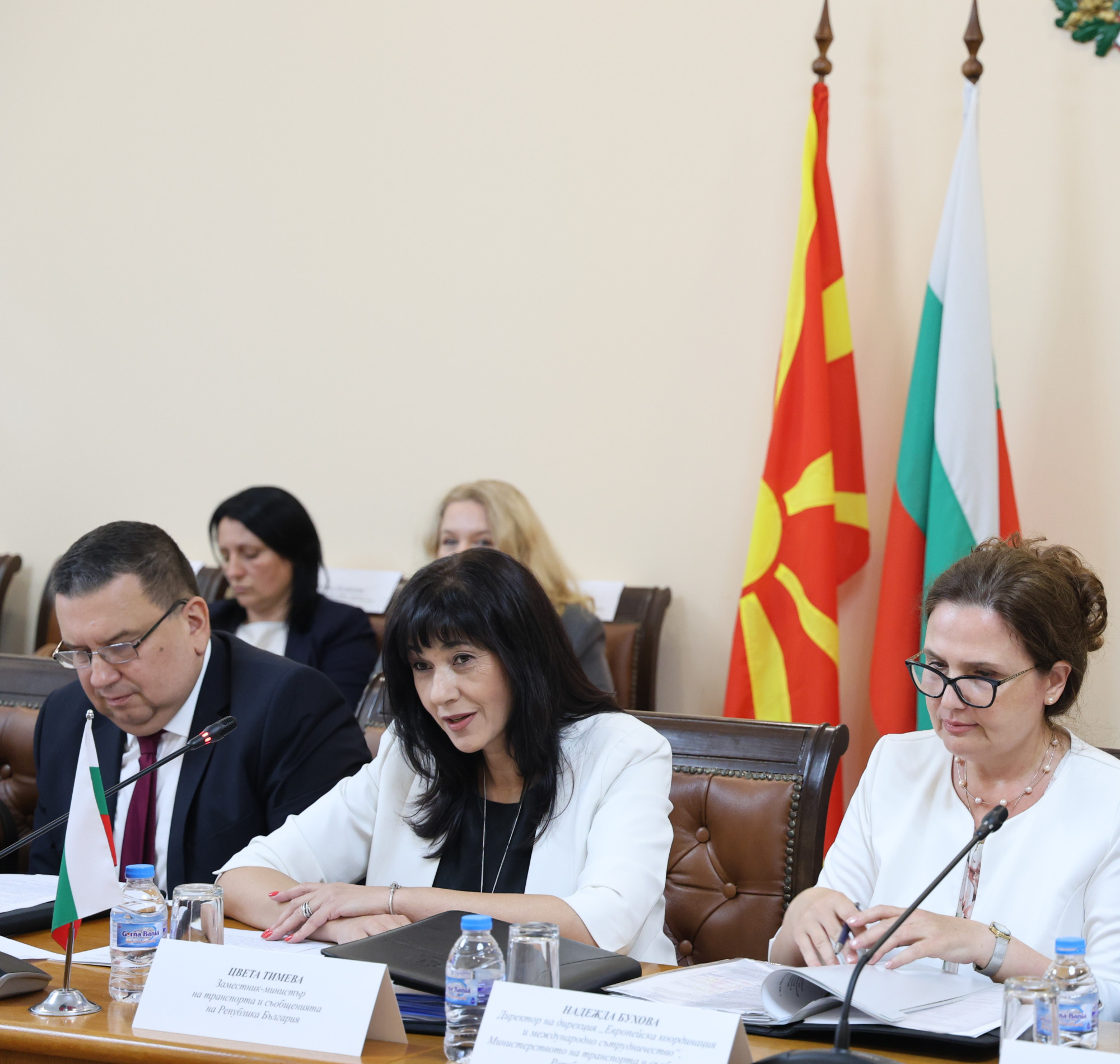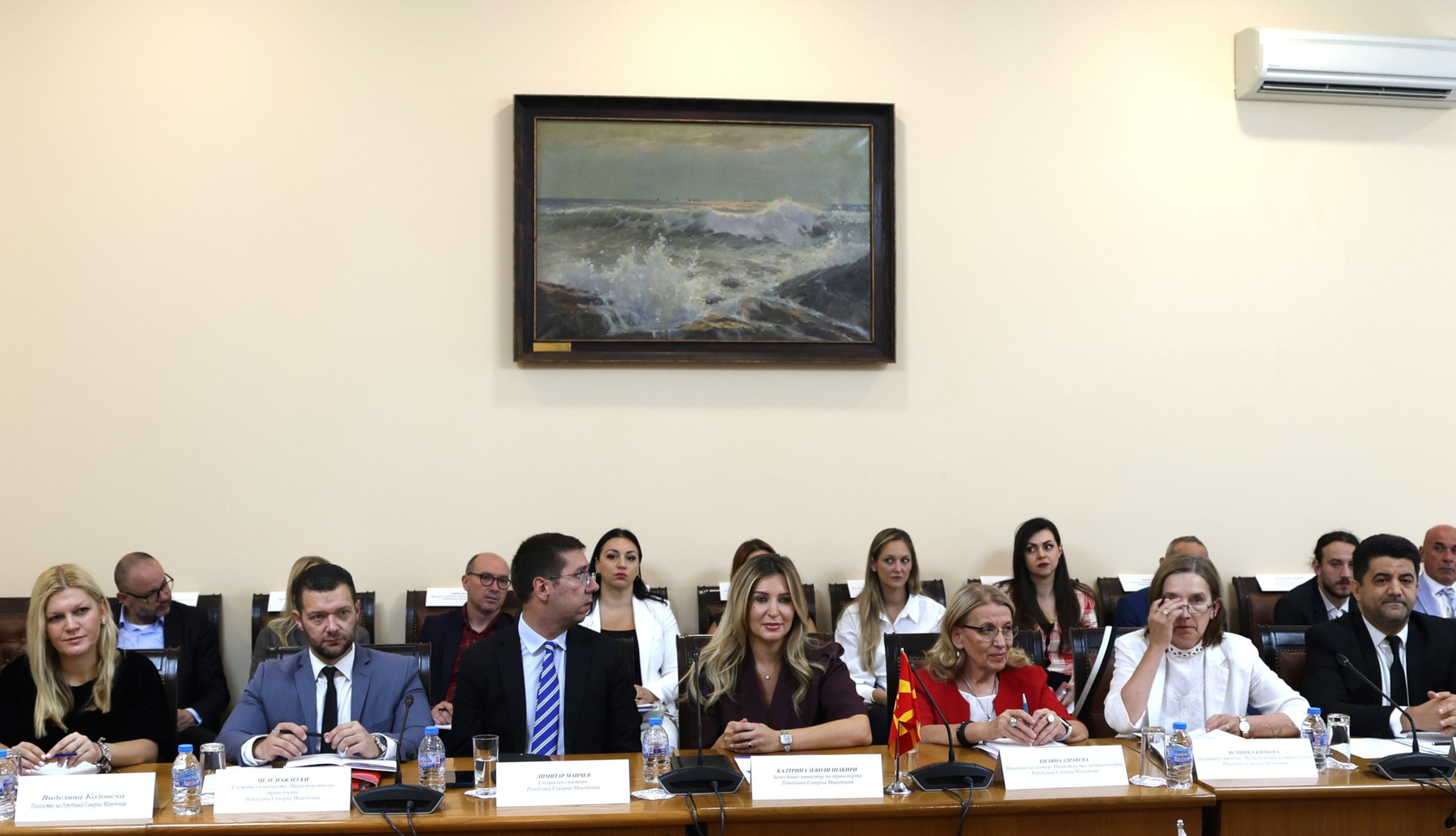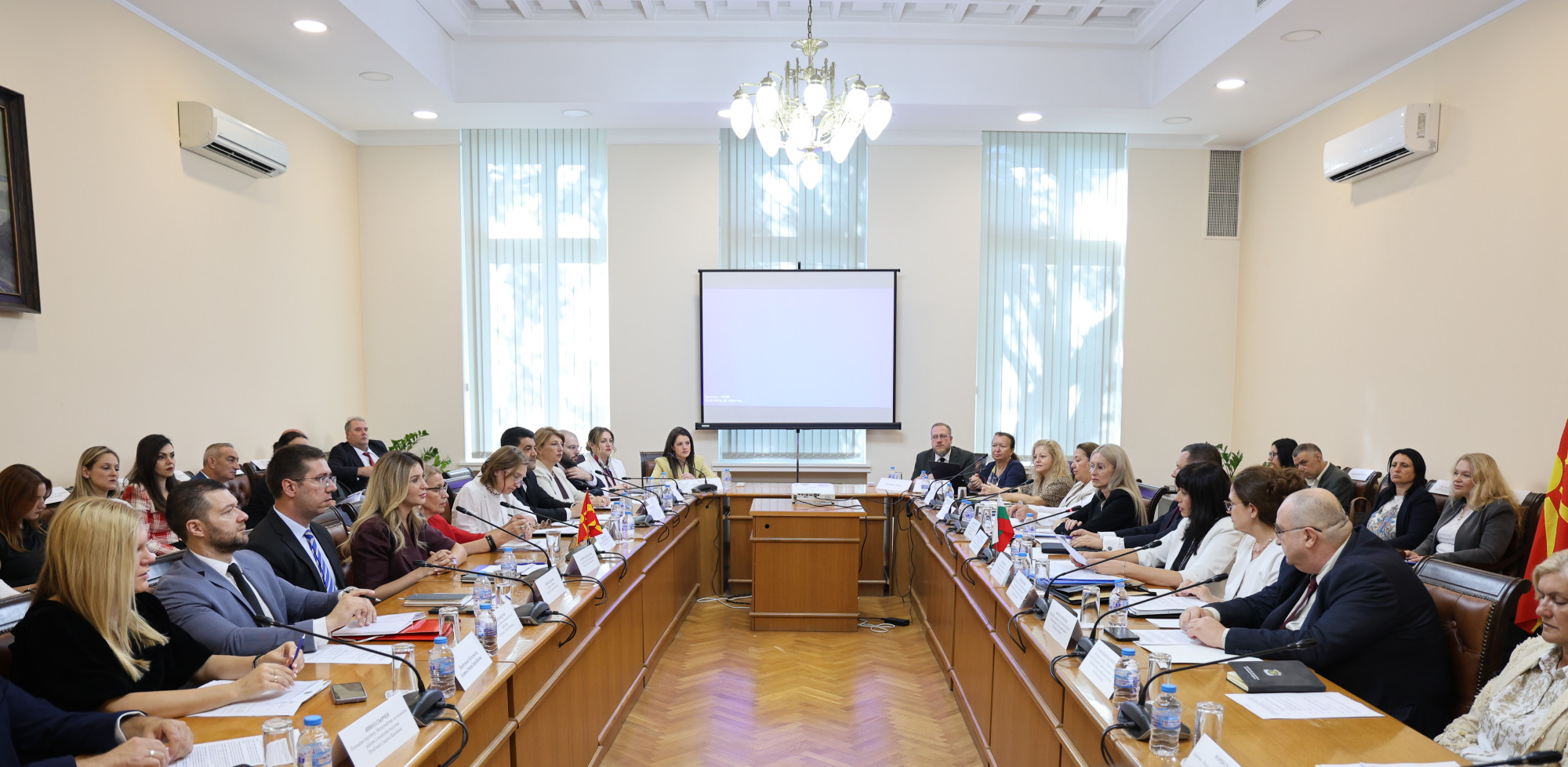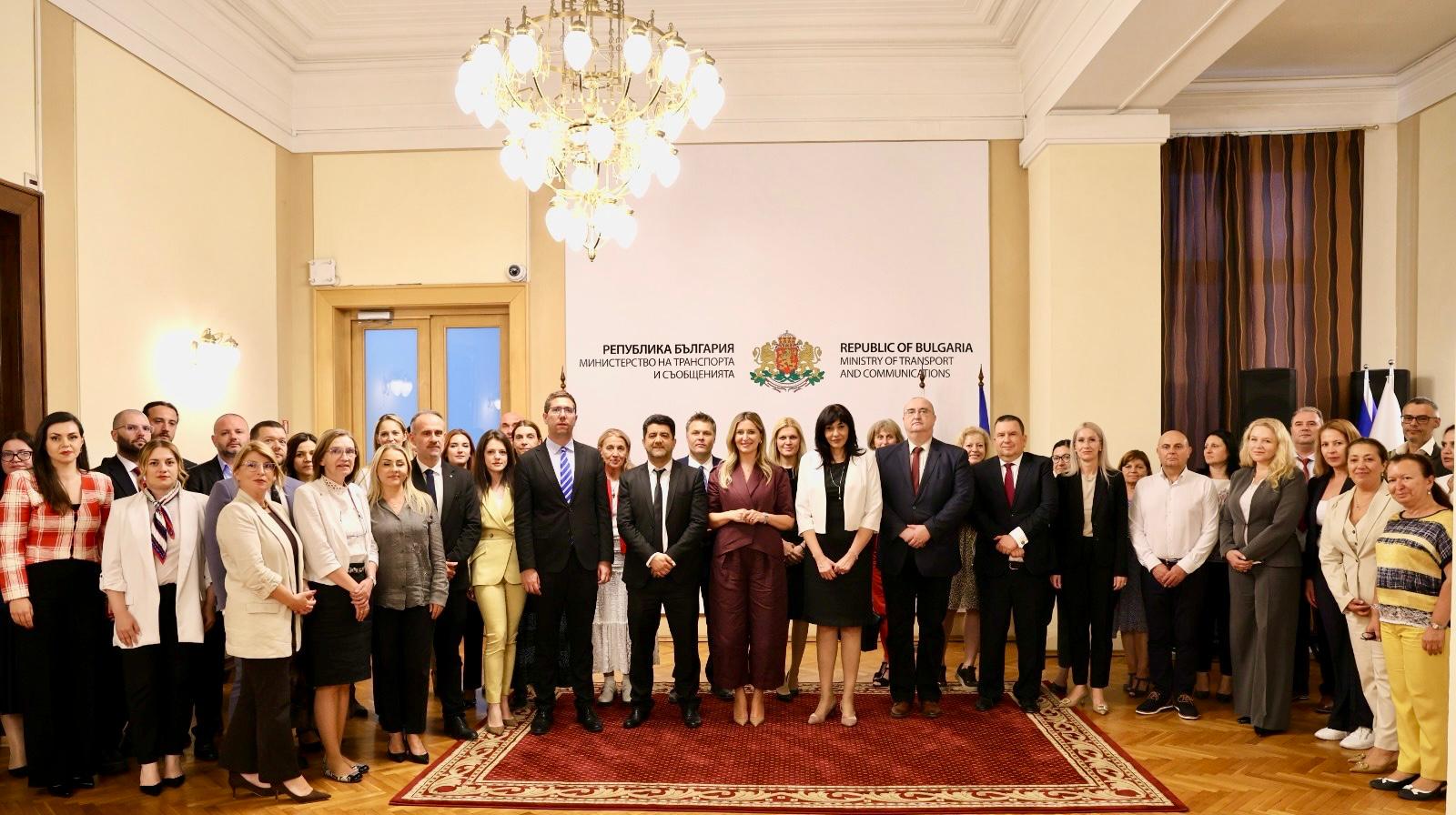
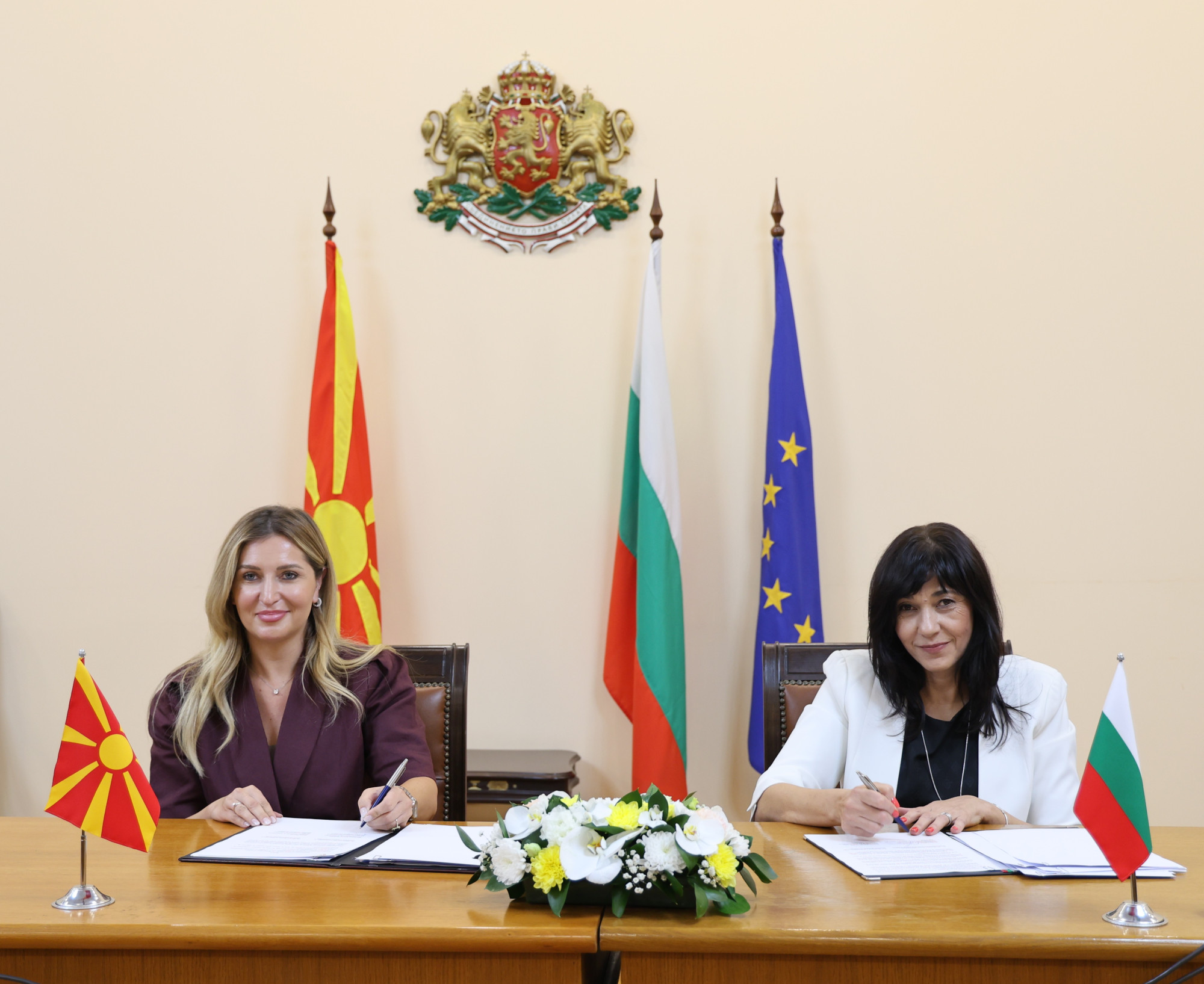
Delegations from the Republic of Bulgaria and the Republic of North Macedonia held in Sofia the inaugural meeting of the Joint Committee established under the Agreement on the Preparation, Construction and Operation of a Cross-Border Railway Tunnel. The project is a key component of Corridor VIII, linking the Black Sea and the Adriatic Sea, and constitutes a natural extension of the global transport corridors connecting Europe and Asia. The meeting was co-chaired by Deputy Minister of Transport and Communications Tsveta Timeva of the Republic of Bulgaria and Deputy Minister of Transport Kaltrina Zekoli Shaqiri of the Republic of North Macedonia.
The Joint Committee adopted its Rules of Procedure and a preliminary indicative timetable for the preparation and construction of the tunnel. The implementation schedule forms part of an official joint letter through which the two countries reaffirm to the European Commission, the European Investment Bank (EIB) and the European Bank for Reconstruction and Development (EBRD) their commitment to completing the railway connection. The delegations also discussed the project's financing opportunities.
“Under the new Bulgarian Government, the Republic of Bulgaria remains committed to its long-standing policy of actively supporting and promoting the full completion of all components of Corridor VIII. The implementation of this multimodal transport corridor is of strategic importance for improving transport connectivity between the Black Sea and the Adriatic Sea. It also constitutes a natural extension of the global transport corridors linking Europe and Asia,” said Deputy Minister of Transport and Communications Tsveta Timeva during the meeting.
Deputy Minister of Transport Kaltrina Zekoli Shaqiri of the Republic of North Macedonia stated that the construction of the cross-border railway tunnel is a strategic regional project that will connect the two countries by rail and facilitate faster and more efficient freight and passenger transport. She emphasised that the project would also strengthen economic cooperation between the two countries.
The Joint Committee’s work will help ensure that the project is implemented in accordance with European standards for safety and connectivity, reinforcing the region’s role as a natural crossroads between East and West.