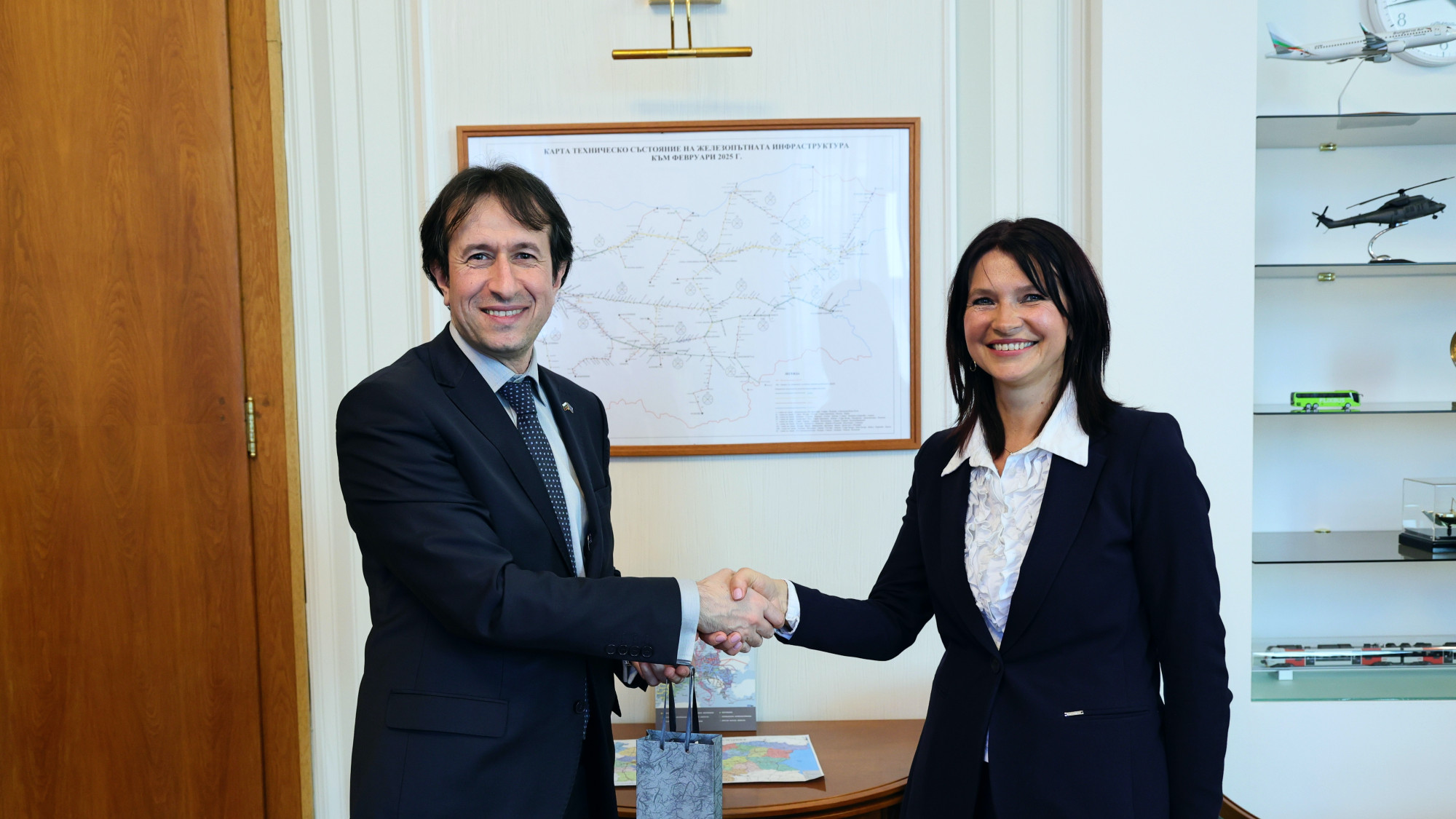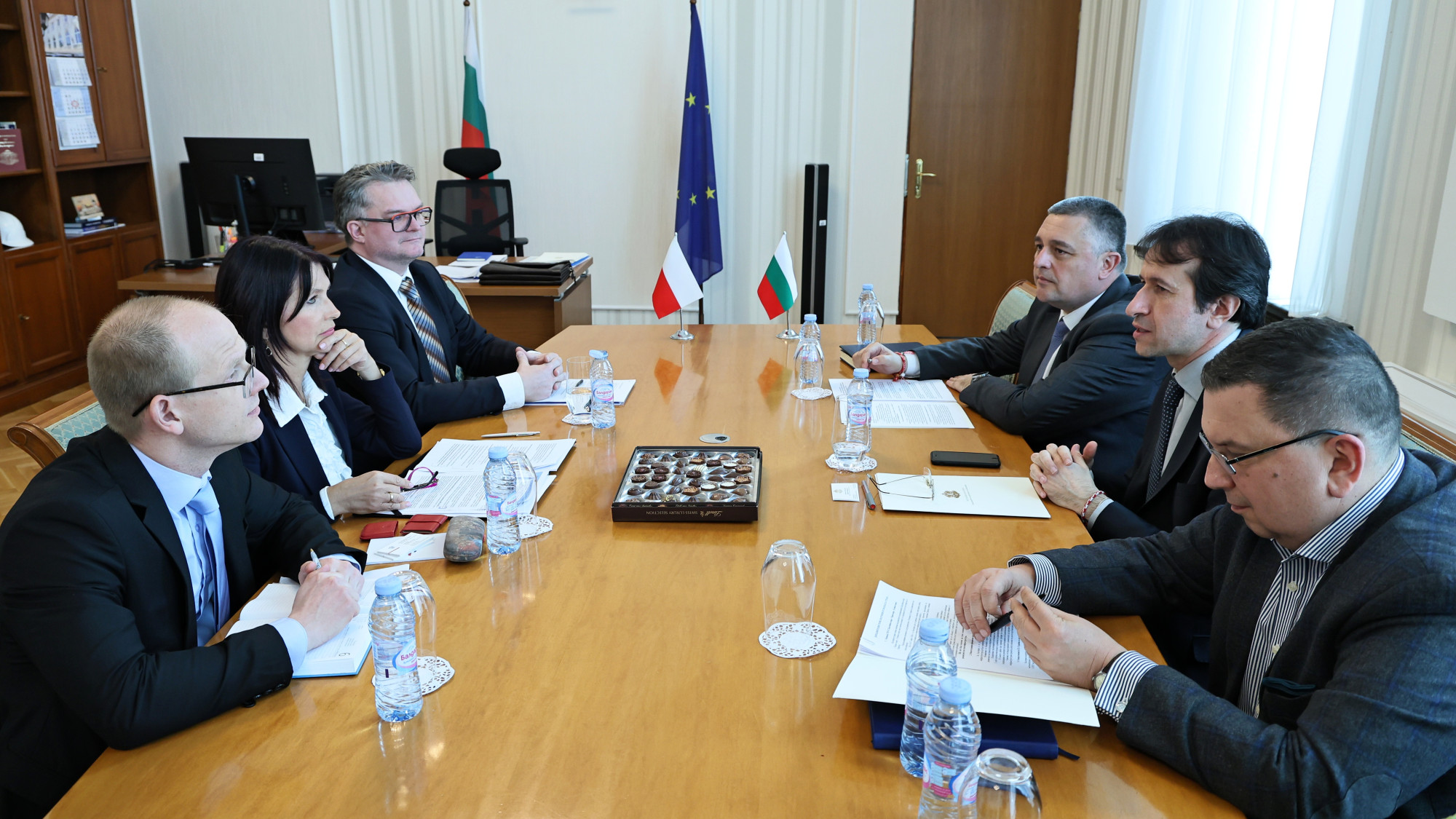
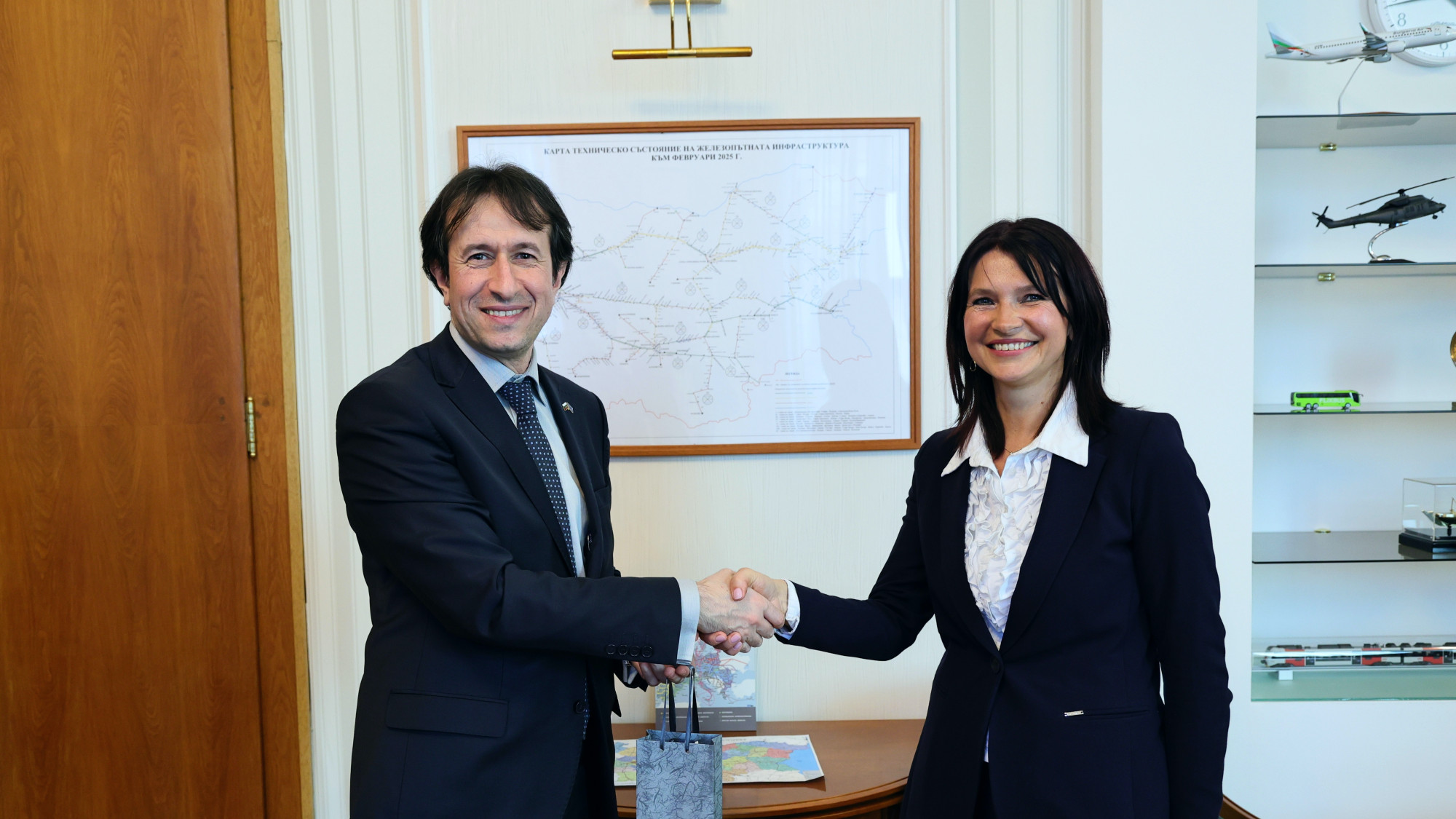
Financing for transport infrastructure should remain among the priorities in the next Multiannual Financial Framework of the European Union. This shared view was expressed during a meeting between the Minister of Transport and Communications, Korman Ismailov, and Anna Janiszewska-Fronczek, Chargé d’Affaires a.i. of the Embassy of Poland.
“Regardless of the future structure of European programmes, the development of transport connectivity should continue to remain among the main priorities of the European Union,” Minister Ismailov noted. He also pointed out that Bulgaria supports the idea of increasing the budget of the Connecting Europe Facility – CEF 3, which is a key instrument for the construction and modernisation of the Trans-European Transport Network.
With regard to the Baltic Sea – Black Sea – Aegean Sea transport corridor, an important north-south connectivity axis in Europe, Anna Janiszewska-Fronczek noted that the projects on Polish territory are already at an advanced stage of implementation.
Minister Ismailov emphasised that Bulgaria, Greece and Romania are working in close cooperation to implement the southern section of the corridor. One of the main objectives is the preparation of joint project proposals for submission under the next call of the Connecting Europe Facility, expected in June – July. Bulgaria plans to propose the project for doubling the Svilengrad – Lyubimets railway line, as well as the electrification of the Svilengrad – Greek border railway section.
Among the country’s key infrastructure priorities is also the construction of a new combined bridge between Ruse and Giurgiu. “It is important to accelerate the construction of additional crossings over the Danube River. These could contribute both to improving transport connectivity in the region and to the development of military mobility within Europe,” the Minister added.