
Three new bridges over the Danube included in the signed action plan between Bulgaria, Greece, and Romania
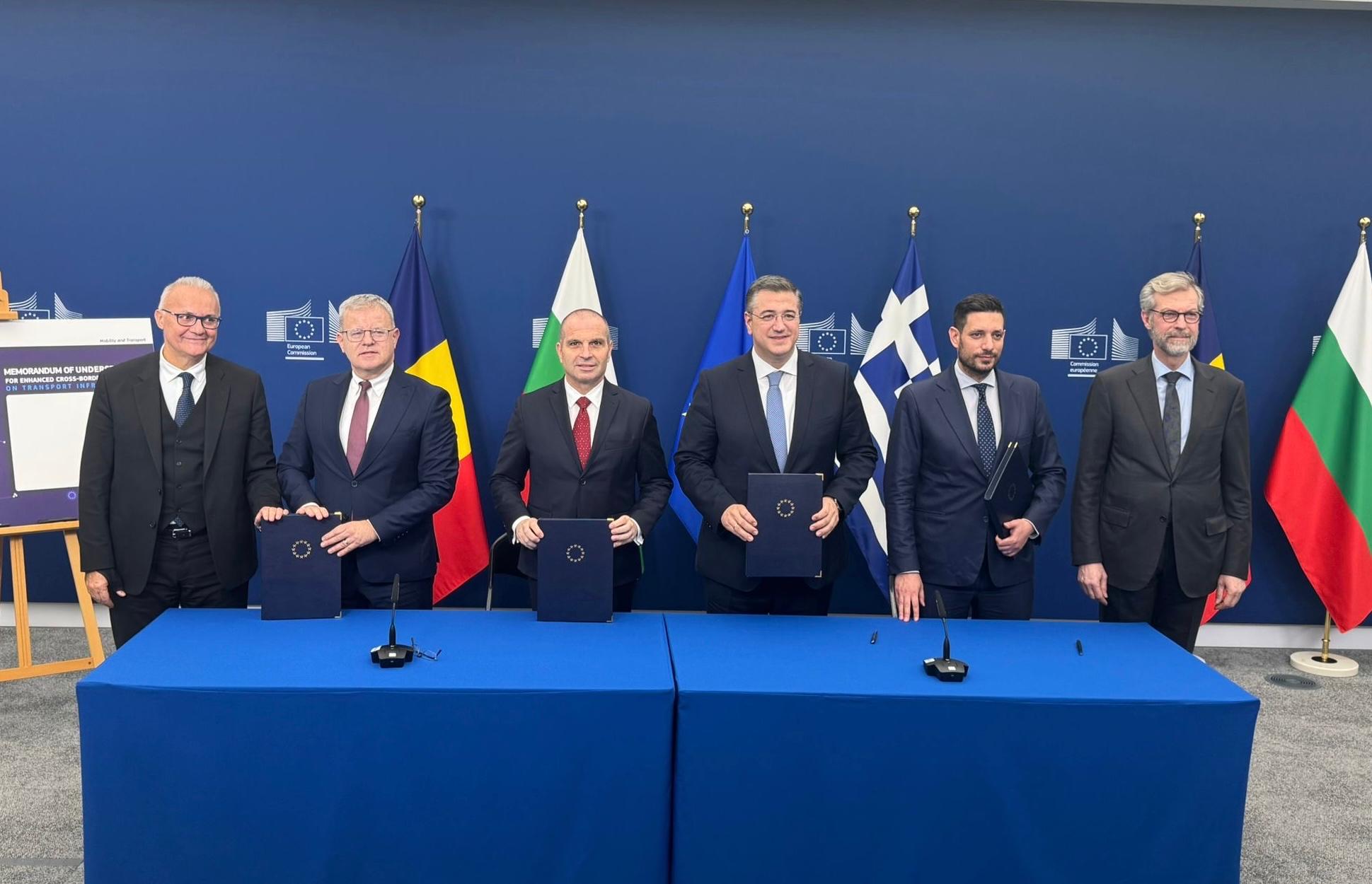
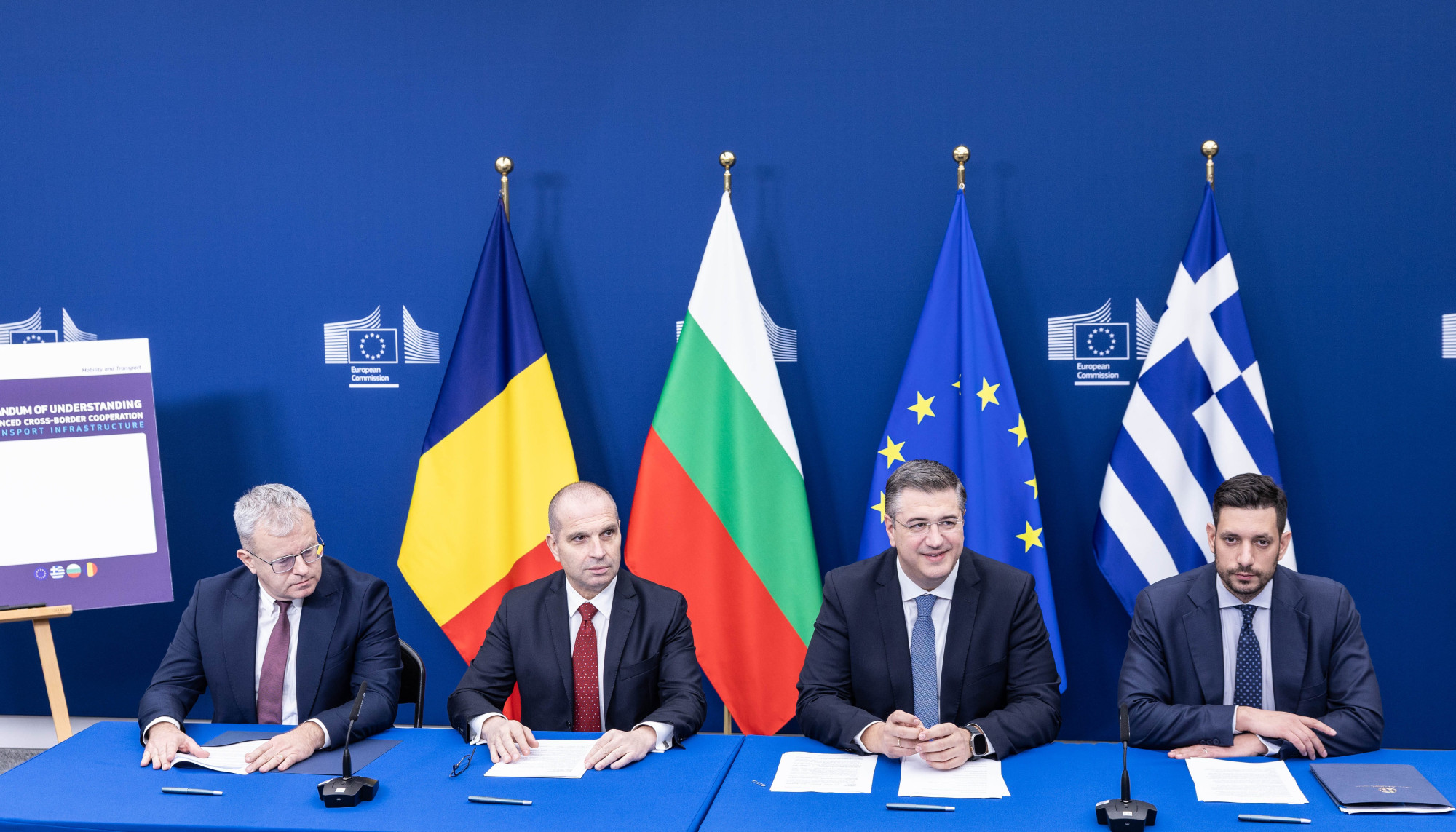
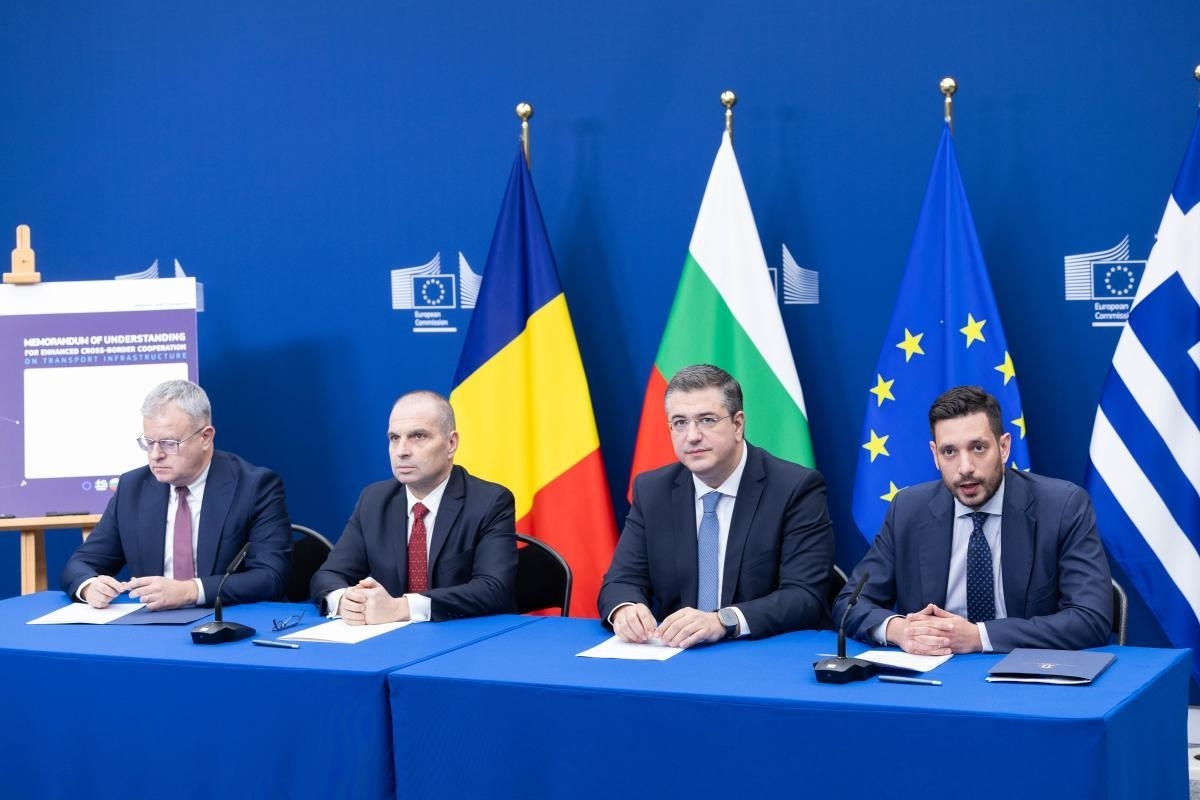
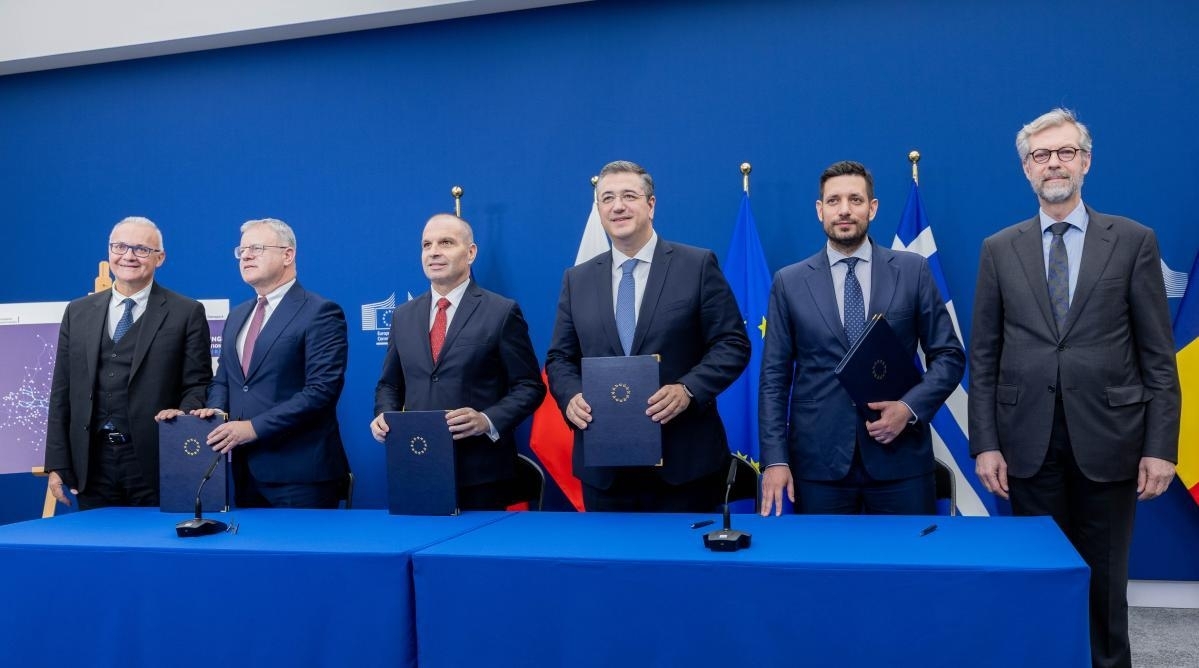
Bulgaria, Greece, and Romania will accelerate the development of the transport axis connecting the Aegean Sea with the Black Sea. This has become possible following the signing this evening in Brussels of a Memorandum of Understanding between the governments of Bulgaria, Greece, and Romania for enhanced cross-border cooperation within the framework of the Black Sea - Aegean Sea Corridor Platform. The document was signed by Deputy Prime Minister and Minister of Transport and Communications Grozdan Karadzhov, the Alternate Minister of Transport of Greece Konstantinos Kyranakis, and the State Secretary for Transport of Romania Ionut Cristian Savoiu.
The initiative is under the aegis of the European Commissioner for Sustainable Transport and Tourism Apostolos Tzitzikostas, who signed a European Commission Declaration in support of it. It highlights that the document is a "decisive step towards faster, competitive, sustainable, and crisis-resilient connectivity in Southeast Europe." Commissioner Tzitzikostas stated that he would work "in close cooperation with the governments of Bulgaria, Greece, and Romania," including through a special task force of EC experts and European financial institutions, to turn all projects from plans into real actions for the three countries.
"The Memorandum and the action plan with specific projects for its implementation are a way to change the strategic connectivity of our region — to open new routes for trade, to alleviate bottlenecks at our borders, and to give Europe the resilience it urgently needs," said Deputy Prime Minister Grozdan Karadzhov.
According to him, today’s ceremony is a significant moment that turns an idea that has long existed on the map into a real process. "For decades, the notion of true connectivity between the North and South remained only on paper — without real action. Today we are beginning to change that because the commitment we are making is not a symbolic gesture, but a real step towards opening new arteries for trade and creating the resilience necessary for Europe," the Deputy Prime Minister emphasized.
Karadzhov pointed out that the Danube lies at the core of this transformation. "The Danube is the backbone of Europe — that living organism which connects our nations, markets, and ambitions. It is a river and a border, but it must not be a barrier. The new bridges — not one, but several — are key to the continent's future, not as bilateral projects but as European infrastructure that strengthens the single market, ensures military mobility, and makes the North-South axis functional," he stated.
A major focus for Bulgaria is the construction of three new bridges over the Danube — a second combined facility at Ruse–Giurgiu, as well as bridges at Silistra–Călărași and Nikopol–Turnu Măgurele. The document also states that the ferry lines Oryahovo–Bechet, Svishtov–Zimnicea, and Silistra–Călărași will be upgraded to dual-use standards to meet military mobility needs and ensure greater flexibility of transport flows.
The plan accompanying the memorandum includes the modernization of road and rail connections in three main directions from south to north. The Western axis will connect Athens with Sofia, reaching Bucharest and Central Europe via Vidin and Calafat. The Central axis begins from Thessaloniki and Alexandroupolis, passes through Svilengrad and Ruse, and reaches Bucharest, and from there towards Ukraine and Moldova. The Eastern axis connects the Aegean and Black Seas — from Alexandroupolis through Burgas and Varna to Constanța. This represents a new perspective for our ports and will provide alternative routes for trade and mobility.
The three countries commit to making maximum use of European Union funds from the Connecting Europe Facility for the future Multiannual Financial Framework 2028–2034. "We will mobilize public-private partnerships and alternative instruments to accelerate the implementation of projects. Financing will not be fragmented, but strategically aligned, so that every investment brings maximum effect for our citizens and business," explained Deputy Prime Minister Karadzhov.