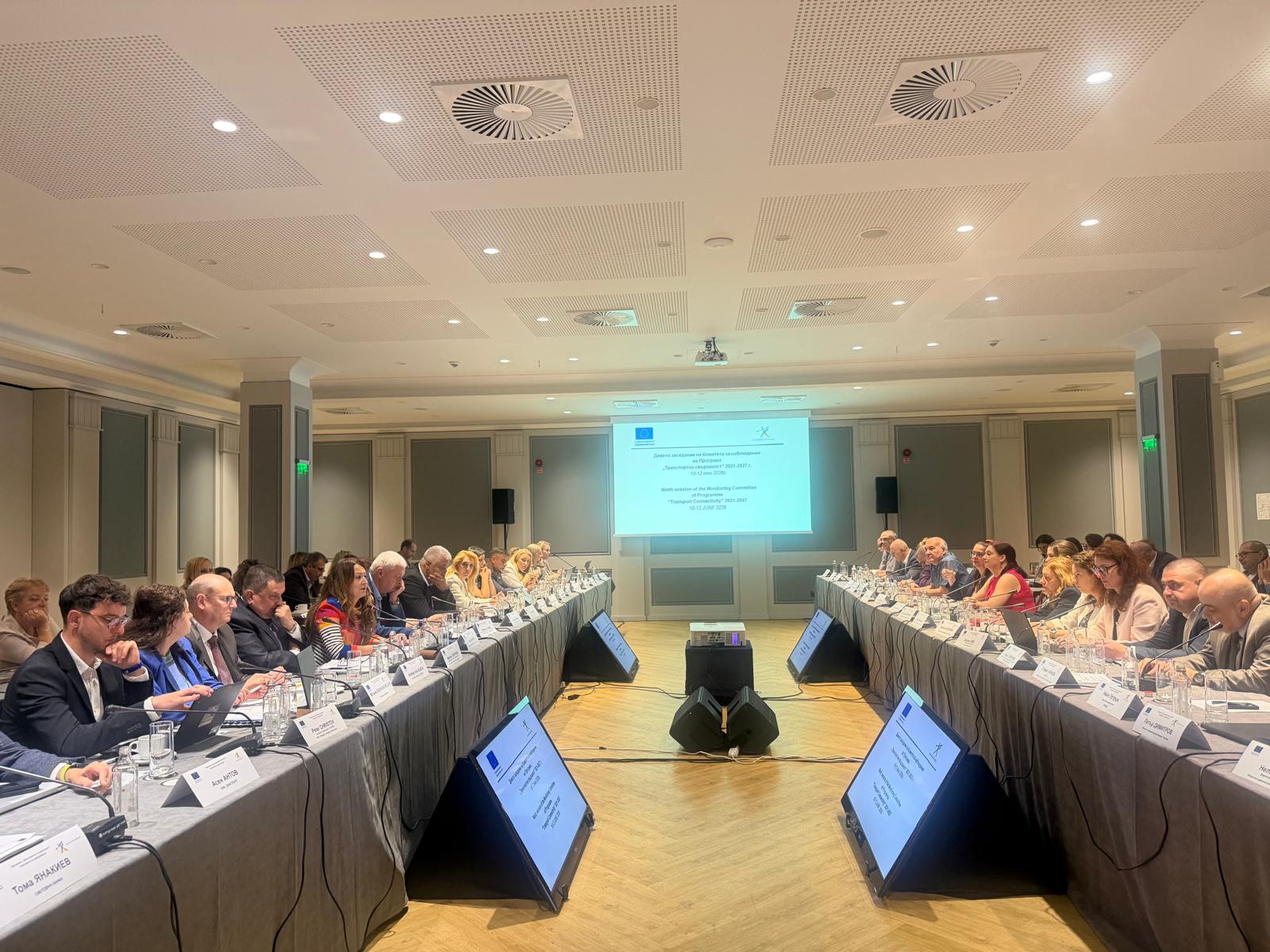
The Transport Connectivity Programme 2021-2027 is among the key instruments for the development of the country's transport infrastructure. This was stated by Deputy Minister of Transport and Communications Anna Natova during a meeting of the monitoring committee of the European programme.
“For the period from November 2025 to April 2026, 15 new contracts with a total value of nearly EUR 69 million have been signed. In the field of railway infrastructure, projects worth approximately EUR 625 million have been contracted, and more than EUR 250 million has been disbursed,” Deputy Minister Natova said.
According to her, a higher implementation pace is required for the Plovdiv-Burgas, Sofia-Dragoman and Sofia-Plovdiv railway lines in order to meet the deadline for completing the projects in December 2029.
Anna Natova highlighted that the investments include a project for the delivery of five new single-deck electric multiple-unit trains under the programme, with delivery expected to be completed by August 2026. She noted that the programme also includes a procedure for the construction of charging infrastructure for electric vehicles, under which six contracts with a total value of approximately EUR 1.4 million have been signed.
“In the areas related to intermodality and innovation, 27 contracts have been signed, including for the development of ports, traction substations, railway stations and information systems. Projects for the Ruse Intermodal Terminal, as well as for the preparation of intermodal terminals in Gorna Oryahovitsa and Vidin, have been approved,” the Deputy Minister said.
Anna Natova said that Northern Bulgaria remains a strategic priority in the implementation of the programme. Nearly 45% of the European co-financing under the Transport Connectivity Programme has been allocated to the region, with contracted funding already exceeding EUR 730 million. “This is a clear sign of our commitment to reducing regional disparities and improving North-South connectivity,” she said.
Deputy Minister Natova pointed out that no risk of losing funding under the N+3 rule is expected in 2025 and 2026. Under this rule, the funds allocated by the European Commission for a given year must be spent and reported within three years. After 2028, however, such a risk may arise if key projects, such as Lot 3.2 of the Struma Motorway and the railway links to the airports in Plovdiv and Burgas, are not implemented.
“Progress under the Transport Connectivity Programme has been steady, but significant challenges remain regarding the pace of implementation of major infrastructure projects. I am confident that, following an assessment by the ministry’s leadership and through good coordination among all institutions and partners, we will continue to implement the programme successfully and achieve the objectives that have been set,” she said.