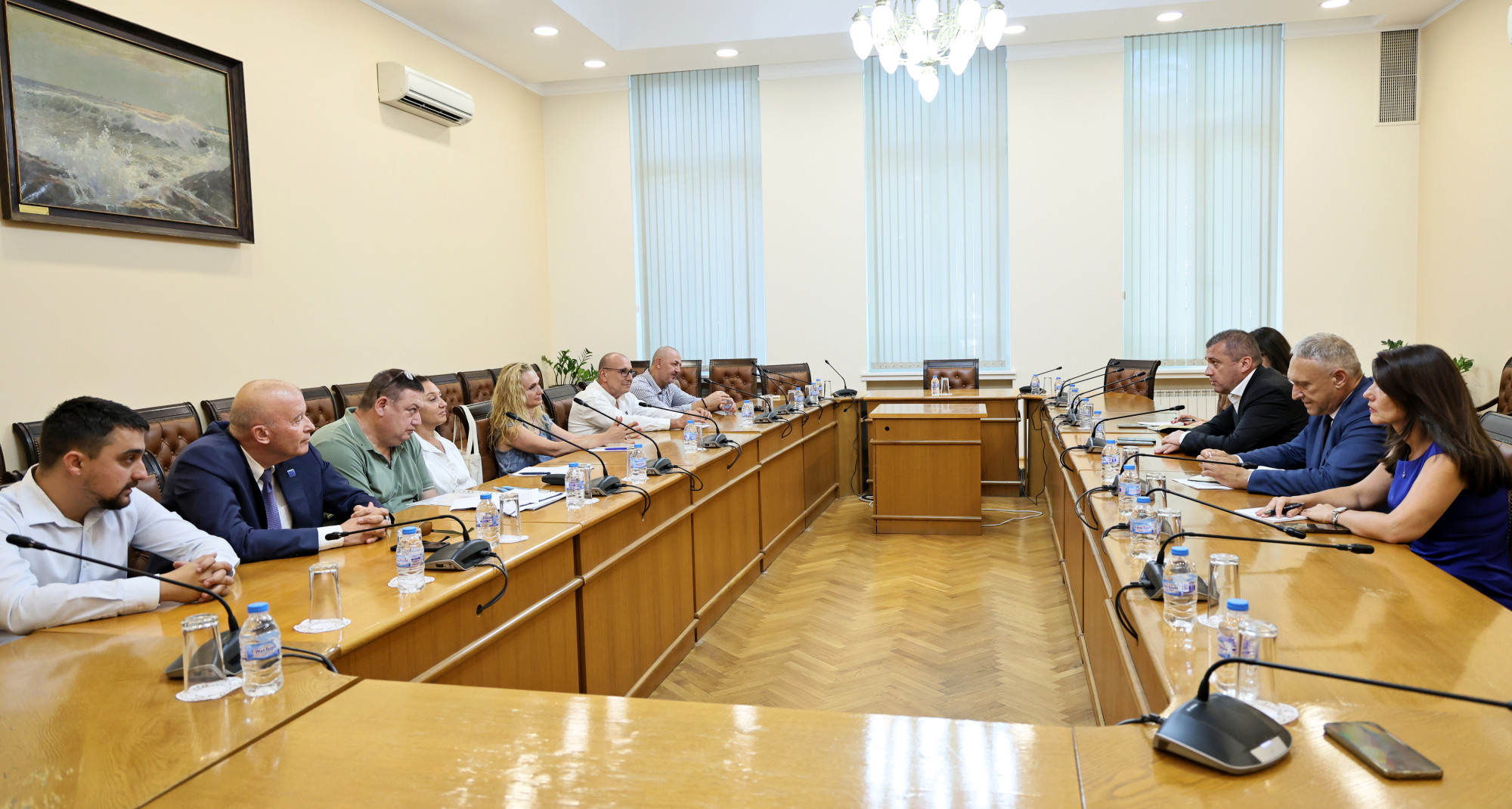
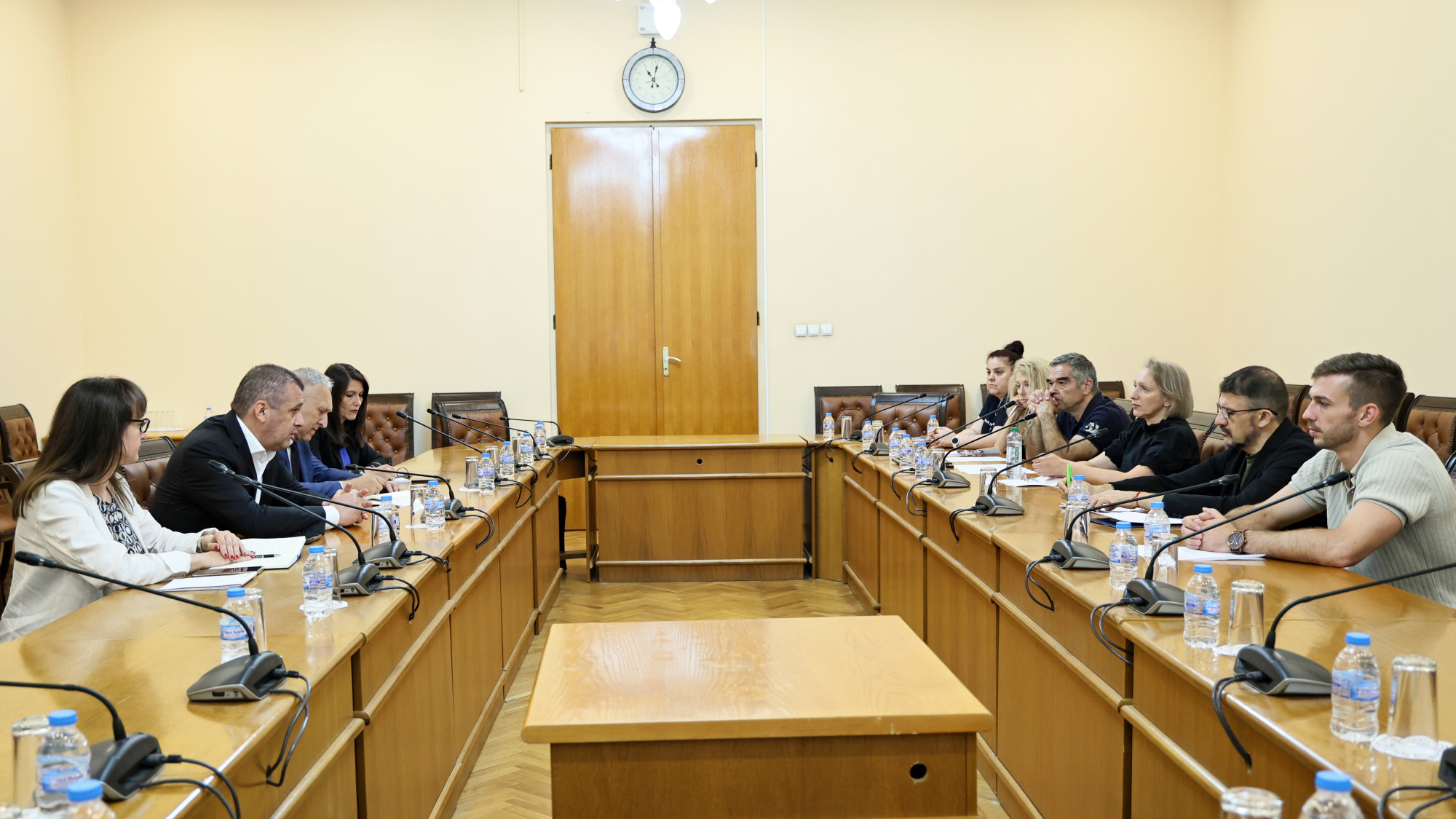
Minister of Transport and Communications Georgi Peev met with parents and relatives of children who lost their lives in road traffic accidents, as well as representatives of non-governmental organisations working in the field of road safety.
“You are our most important partners in this process. You are best placed to present an objective picture of the situation and to tell us what needs to be done to improve road safety,” Minister Peev said during his meeting with the parents.
During the discussions, which were attended by Deputy Minister Hristina Velinova and the Executive Director of the Executive Agency Automobile Administration, Boyko Ranovski, the Minister stressed that the personal experiences of families affected by the devastating consequences of the country’s war on the roads would play a central role in shaping the new measures. He noted that public institutions too often diffuse responsibility through strategies and action plans that are not implemented effectively.
The Ministry of Transport and Communications has already begun establishing an expert working group comprising all responsible institutions. Its task is to develop, within a short timeframe, concrete proposals to centralise and improve the effectiveness of road traffic enforcement.
“This fragmented approach to road traffic enforcement must change. Together with the other responsible ministries and institutions, we have agreed that the various enforcement bodies should be brought together into a single organisation. The Ministry of the Interior will continue to perform its road policing duties, but inspectors from the Executive Agency Automobile Administration, the National Toll Administration, the Road Infrastructure Agency and other bodies should operate as one unified organisation,” Minister Peev said.
Particular emphasis was placed on prevention. To achieve this, all monitoring and enforcement systems must be integrated. This would make it possible to detect in real time not only speeding, mobile phone use or failure to wear a seat belt, but also dangerous overtaking, driving in the emergency lane, overloaded lorries, unsecured loads, traffic congestion, objects on the carriageway and other hazards.
“Once we have a unified system that monitors every vehicle from the beginning to the end of a given road section and detects that a driver is behaving aggressively or dangerously, overtaking via the emergency lane, intimidating other road users, or that a lorry is overloaded, exceeding the speed limit or committing other offences, the system will record that behaviour.
The information will then be transmitted to road patrols, enabling the vehicle to be stopped and the appropriate enforcement action to be taken,” Minister Peev said. He stressed that safety should be measured using objective criteria and clearly defined processes, similar to the standards applied in the aviation sector.
Improving the training of new drivers is another key element of the reform. The Minister was unequivocal that compliance with the mandatory practical driving hours at night and on motorways would be closely monitored in order to put an end to the practice of falsely recording such training. Consideration is also being given to establishing safe driving centres, where newly qualified drivers would, during the first two years after obtaining their driving licence, undergo additional training using simulations of hazardous situations, such as skidding on wet roads, negotiating sharp bends and other challenging driving scenarios.
Minister Peev also expressed support for proposals put forward by relatives of victims of road traffic accidents, including the introduction of a probationary driving licence for newly qualified drivers during their first two years behind the wheel, accompanied by restricted driving privileges such as limits on vehicle engine power, a ban on night driving and a zero-tolerance policy on alcohol consumption.
In conclusion, Minister Peev said that although institutional change takes time and the system is inherently slow to reform, the Government is determined to establish a new model of road user behaviour – one that begins with family upbringing and education.