At the initiative of Minister of Transport and Communications Georgi Peev, a working meeting was held at the National Toll Administration to improve the effectiveness of government enforcement and enhance road safety. The meeting was attended by Minister of the Interior Ivan Demerdzhiev, Minister of Regional Development and Public Works Ivan Shishkov, Deputy Minister of Transport and Communications Hristina Velinova, Deputy Minister of Justice Iva Kecheva, Director of the National Toll Administration Prof. Oleg Asenov, as well as representatives of the Road Infrastructure Agency, the Executive Agency “Automobile Administration” and the State Agency “Road Safety”.
The shared objective is to establish a unified real-time information exchange system that makes full use of the country's existing technological capabilities. This will enable more effective enforcement through proactive preventive measures, creating a stronger deterrent effect for road users and contributing to a tangible reduction in road casualties.
“The Prime Minister has tasked us with preparing a concrete action plan by the end of August,” Minister Georgi Peev said. According to him, the immediate priority is to develop a comprehensive strategy incorporating specific measures, an analysis of the current legislative framework, proposals for the necessary legal amendments, and the financial resources required for their implementation.
Minister Peev stressed that Bulgaria already possesses a vast amount of road traffic data. “We have more than enough data, but there is no coordination between institutions on how to use it,” he said, adding that traffic enforcement is currently fragmented across different public authorities.
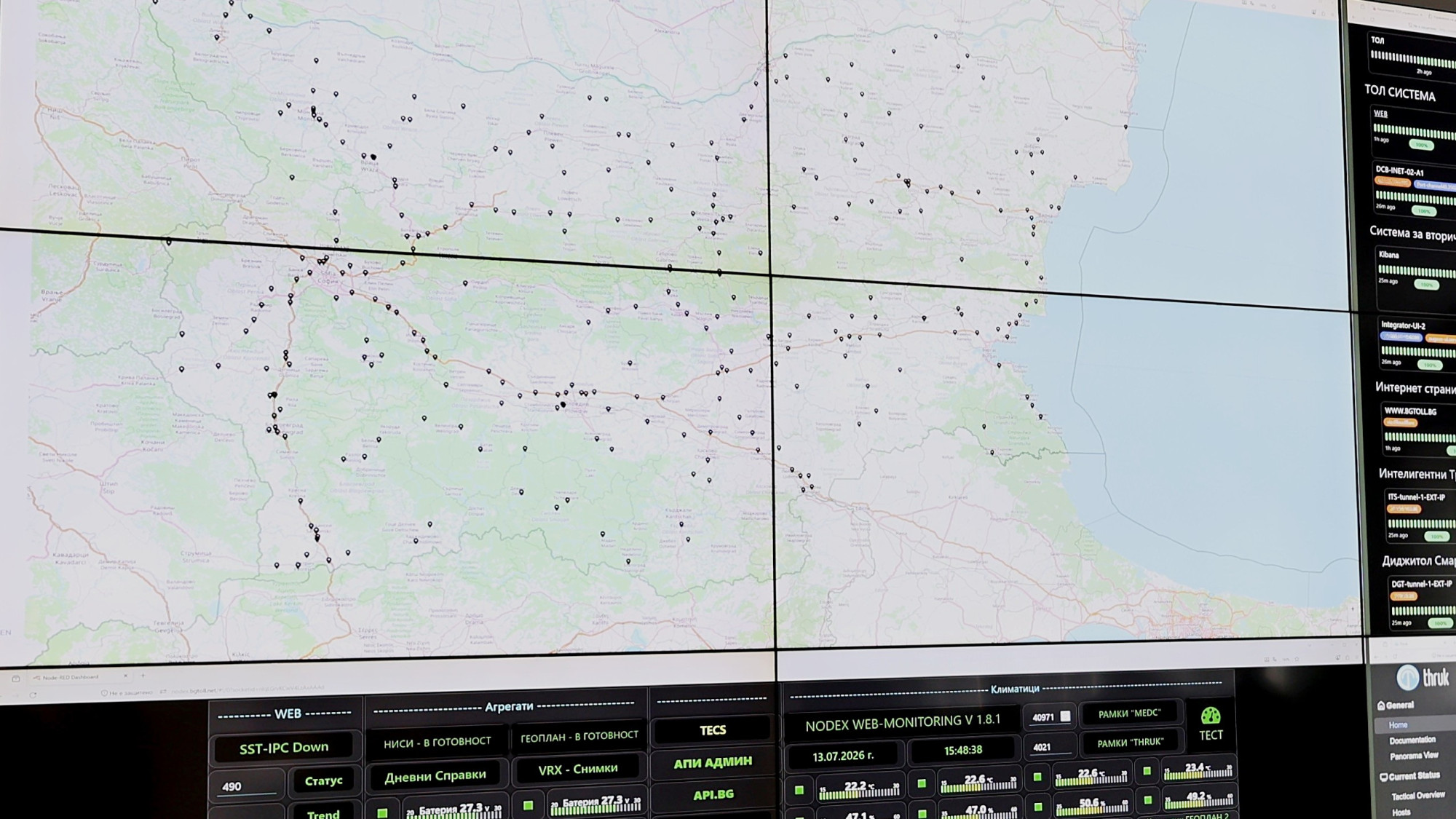
During the meeting, the capabilities of the National Toll Administration were presented. The system operates 272 enforcement points across the country, 100 of which are equipped with integrated weigh-in-motion sensors. These monitor nearly 600,000 heavy goods vehicles, while the system collects extensive data on traffic flows, road infrastructure loading and traffic violations.
At present, the toll system exchanges only average-speed enforcement data with the Ministry of the Interior. The objective, however, is to provide real-time information to all competent authorities, including the Ministry of the Interior, the Customs Agency, the Executive Agency “Automobile Administration” and the National Revenue Agency.
The data are retained for one year and can be made available almost immediately. “The only thing worse than having no data is having an abundance of data and not knowing what to do with it,” Georgi Peev said. At the same time, information captured by the toll cameras can be transmitted to enforcement authorities within three seconds, enabling a significantly faster response and more effective enforcement.
It was also noted that the state loses around BGN 40 million each year as a result of non-compliant transport operators using concealed vehicle registration plates.
Among the measures discussed was the creation of a risk profile for every heavy goods vehicle based on data collected by the toll system, together with the use of the existing analysis of the actual wear and tear of the road infrastructure. The proposed action plan will also include the necessary investments, including the expansion of the network of enforcement weigh-in-motion sensors.
Participants in the meeting agreed that efforts should focus primarily on prevention. They emphasised that the emphasis of road safety policy should shift from imposing penalties to preventing violations before they occur.