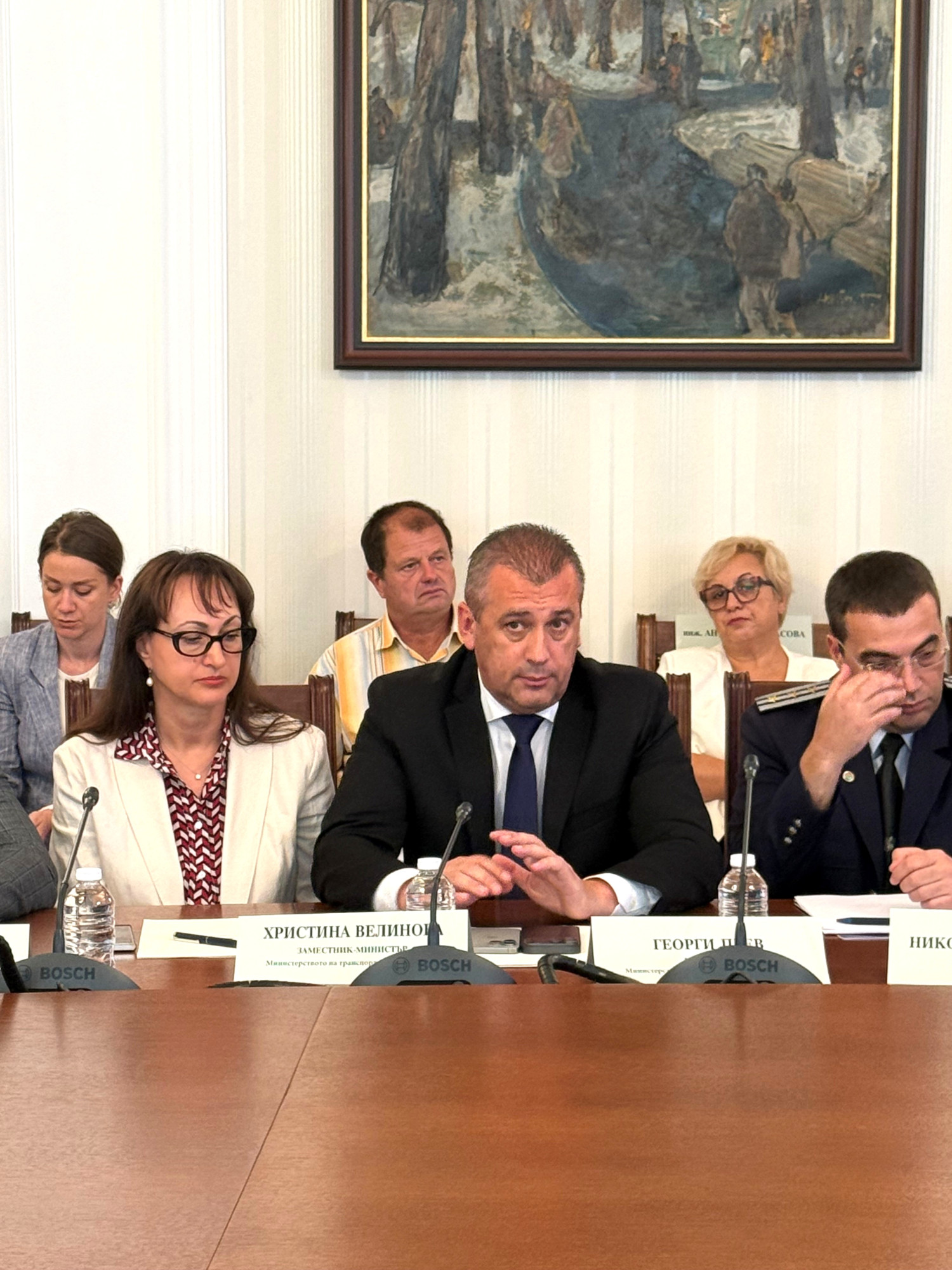
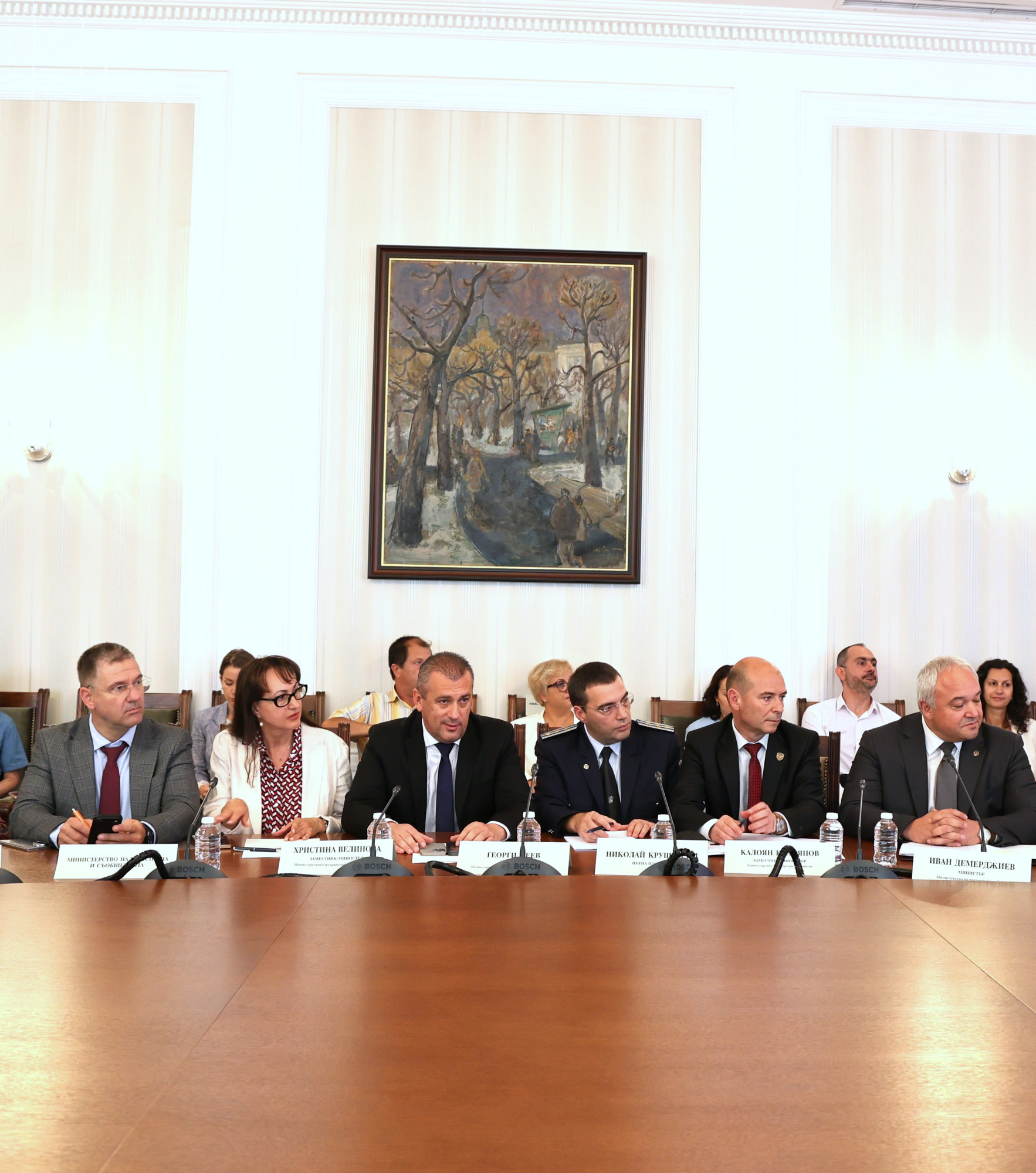
Improving road safety is among the Government’s top priorities, while the main obstacle to the system at present is the fragmentation of responsibilities across different institutions. This was stated by the Minister of Transport and Communications, Georgi Peev, at the round table entitled “Road Safety, Risk Assessment and Effective Management of Public Resources”, held at the National Assembly.
He pointed out that the State cannot achieve tangible results if it continues to respond only through isolated measures and must instead adopt a comprehensive, system-wide approach. At present, responsibilities are divided among numerous institutions, ministries and municipalities, each managing a different element of the system. The lack of integrated data sharing between them prevents this information from being used effectively for genuine prevention.
According to the Minister, effective risk assessment requires accurate data and statistics that are analysed thoroughly and translated into targeted follow-up measures. In his view, the current public and institutional debate focuses primarily on penalties at the expense of preventive action, whereas comprehensive measures remain the key to achieving meaningful results.
The Minister announced that the working group tasked with drafting the National Plan for Enhancing the Effectiveness of State Control and Improving Road Safety has now been working for three weeks and is analysing all submissions received.
“I call on everyone to join efforts so that we can review all proposals during the month of August,” he further noted.
Georgi Peev stressed that road safety is an issue that transcends political divisions and called for a joint effort from all stakeholders. The working group’s proposals will also be subject to public consultation with sectoral associations and non-governmental organisations before being presented to the National Assembly Committee on Transport and Communications.