In 2025, 10 Bulgarian organisations won €12.8 million to implement five projects in the digital sector under the Connecting Europe Facility. This is a significant achievement for Bulgarian companies, which managed to establish themselves and demonstrate a high level of activity, expertise, and innovation in an extremely competitive European environment. For the team at the Ministry of Transport and Communications, as the national coordinator of the digital sector under the Connecting Europe Facility, it is important that all five projects that were submitted won funding.
By Decision No 493 of 21 July 2020 a national strategic document "Digital Transformation of Bulgaria for the period 2020-2030" was adopted. The document sets out the principles of digital change in the main areas of economic life. The aim of the widespread use of digital technologies is to reduce the use of energy and resources.
The European Commission has launched a public consultation on a European strategy for data. The results of this study will be included in possible Commission initiatives on data access and reuse in the coming months. Participation in the consultation is done by filling out a survey.
The Ministry of Transport and Communications organized Third National ELRC Workshop in Bulgaria, which will be held online on November 24, 2022, at 9:30 am. The event takes place within the European Language Resources Coordination (ELRC) project, in cooperation with the Institute for the Bulgarian Language at the Bulgarian Academy of Sciences.

The International Telecommunication Union (ITU) organize a Roundtable on “The Telecommunications industry in the post-COVID-19 world”, to be held on 4 February 2021, 14.00-16.00 CET.
The objective of this Roundtable is to understand and further take stock on some of the changes and potential funding challenges within the telecommunications sector in the post-COVID-19 world, focusing on:
What are the new business and operating models required to connect everyone?

The global data volume is growing very fast. Whereas cloud computing happens mostly in large data-centres today, by 2025 this trend will reverse: 80% of all data is expected to be processed in smart devices closer to the user, known as edge computing.
The availability of both edge and cloud computing is essential in a computing continuum to ensure that data is processed in the most efficient manner. Energy-efficient and trustworthy edge and cloud infrastructures will be fundamental for the sustainable use of edge and cloud computing technologies.
On 25 March 2021, the Member States, in close cooperation with the Commission, agreed on a Union-wide Connectivity Toolbox, pursuant to the Connectivity Recommendation of 18 September 2020. The Toolbox consists of a set of best practices that are considered as the most efficient in allowing and encouraging operators to roll out very high capacity networks.
On February 21, 2025, the Commission and the HRVP presented the Joint Communication to strengthen the security and resilience of submarine cables. It introduces a range of measures to bolster the resilience of this critical infrastructure, addressing prevention, detection, response, recovery, and deterrence.
Communication cables connect several Member States to one another, link islands to the EU mainland, and connect the EU to the rest of the world, carrying 99% of intercontinental internet traffic. Subsea electricity cables facilitate the integration of Member States' electricity markets, strengthen their security of supply, and deliver offshore renewable energy to the mainland.

On behalf of the European Commission, the CEF Automated Translation Tools and Services consortium launched a survey in December 2020 to find out how European SMEs would like eTranslation (the CEF Automated Translation platform) to be improved and expanded to include new digital services. You can find the link to the survey below!
The survey focuses on four key areas identified as priorities by the European Commission:
Within the framework of the ITU European Regional Initiative on Building Confidence and Security in the use of Telecommunications/ICTs, adopted by the World Telecommunication Development Conference 2014 (WTDC-14), Dubai, the Conference is co-organized by the Telecommunication Development Bureau (BDT) of the International Telecommunication Union (ITU) and the Polish and German Safer Internet Centres, which have been working together within the European Commission’s Safer Internet Program.

24-25 May 2017, Ohrid, The former Yugoslav Republic of Macedonia
SEEDIG stands for South Eastern European Dialogue on Internet Governance and it is an open, inclusive and informal space for dialogue on Internet governance issues between stakeholders from South Eastern Europe and the neighbouring area.

The European Commission has adopted a revised Communication on State aid for broadband networks (‘Broadband Guidelines'). The revised Broadband Guidelines set out the rules under which the Commission will assess State aid measures notified by Member States to support the deployment and take-up of broadband networks in the EU. The new rules contribute to the EU's strategic objectives of ensuring gigabit connectivity for everyone and 5G coverage everywhere by the end of the decade, which is essential to achieve the digital transition of the Union. The new Guidelines will enter into force the day following their publication in the Official Journal of the European Union, which is expected in January 2023.
Тhe European Commission has monitored Member States’ progress in digital and published annual Digital Economy and Society Index (DESI) reports. The DESI Index ranks Member States according to their level of digitalisation and analyses their relative progress over the last five years, considering their starting point.

The event is celebrated each February in more than 150 countries. This year's slogan is "Be the change: Unite for a better internet".
The slogan for the Bulgarian event is „От теб з@виси“. The main focus will be on children’s education in safer use of the Internet and mobile communications.
More information for the Bulgarian event can be found at: https://www.saferinternetday.org/web/bulgaria/sid
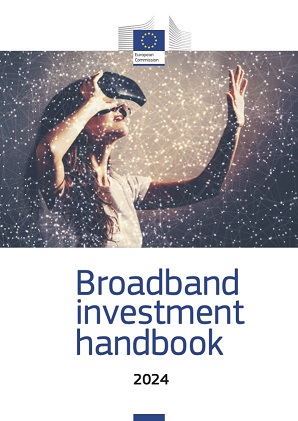
This handbook aims to assist public authorities in planning, implementing, and monitoring broadband projects within their territories.
This consultation will help shape the future policy agenda on the European data economy. It will feed into a possible Commission's initiative in 2017 on Building the European Data Economy.
More information and a chance to participate in the consultation can be found here.
It will focus on how Open Data can be used in the Transport & Mobility domain. It will demonstrate how individual companies can reap the benefits of Open Data, the challenges they face and how they overcome these challenges.
More information about the webinar and a registration form can be found here.
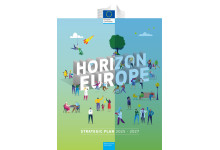
On 20 March 2024 the European Commission (EC) has adopted the Horizon Europe strategic plan 2025-2027 for research and innovation to underpin journey to a green, digital and resilient future.
By Decision No 555 and Decision No 556 of the Council of Ministers of 6 August 2020, an updated National Broadband Infrastructure Plan for Next Generation Access "Connected Bulgaria" and an Updated policy in the field of electronic communications of the Republic of Bulgaria were adopted.
Successful candidates receive free tickets, trips and meetings, and the opportunity to submit their studies.
Application deadlines:
If you are doing something interesting, you can apply here.


